
Climate change, and in particular it’s associated effect of coral bleaching, is a key threat to the future of coral reefs. Corals and many other reef organisms depend for survival on symbiotic algae living in the polyps as these algae provide up to 95% of the coral’s energy for growth, reproduction, and feeding. These algae, zooxanthellae, also give the coral their beautiful colour and when the corals become stressed, the loss of the zooxanthellae from the coral colony leaves a bare white skeleton or ‘bleached’ appearance. If conditions improve and the source of stresses is removed affected corals may recover, with zooxanthellae returning but this depends on the duration and severity of the environmental disturbance. A prolonged period of stress increases the likelihood of coral death.
The coral bleaching event of 1998 was by far the worst on record and also the most widespread as 16% of coral reefs were effectively destroyed throughout the world. This episode coincided with prolonged periods of drought and higher than average sea surface temperatures, linked with the 1998 El Niño event.
Climate change causes sea temperature rise, sea level rise and pH changes from ocean acidification. Ocean acidification is the ongoing decrease in the pH of the Earth’s oceans, caused by the uptake of carbon dioxide (CO2) from the atmosphere. An estimated 30–40% of the carbon dioxide released by humans into the atmosphere dissolves into oceans, rivers and lakes.

Photo: Healthy reef and bleached reef (by New Heaven Dive School)
Dead coral will break into pieces and rubble and finally into sand. The function of a habitat for fish and other marine species, its function as coastal protection and the dive site that attracts tourism are now lost.
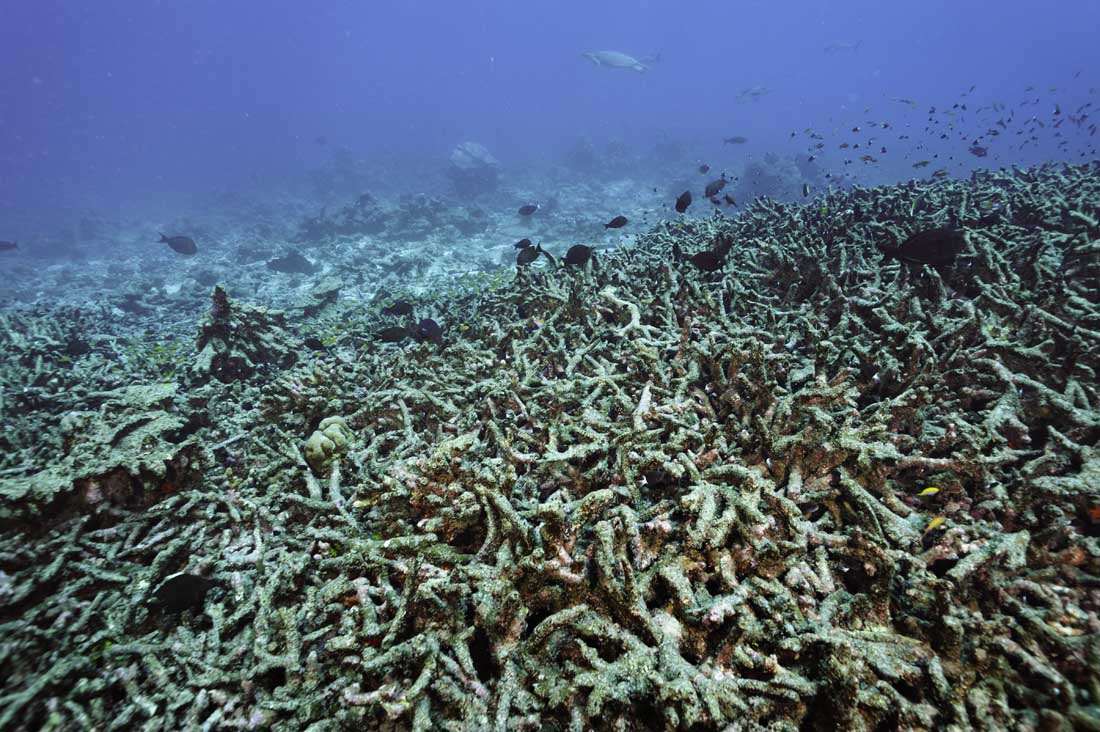
Photo: Reef broken into rubble (unknown)

Figure: Major bleaching areas recorded for years